Federal Bureau of Investigation
Clown in a CornfieldThe Federal Bureau of Investigation enters the aftermath of the Kettle Springs massacre as part of a wider law-enforcement response, helping turn the conspirators’ hidden connections into an investigative trail. Its examination of phone records, sheriff’s-office emails, and location data leads to questioning and arrests, exposing the irony that the technology the plotters hated helped bring their network to light.
Arrival and Immediate Context
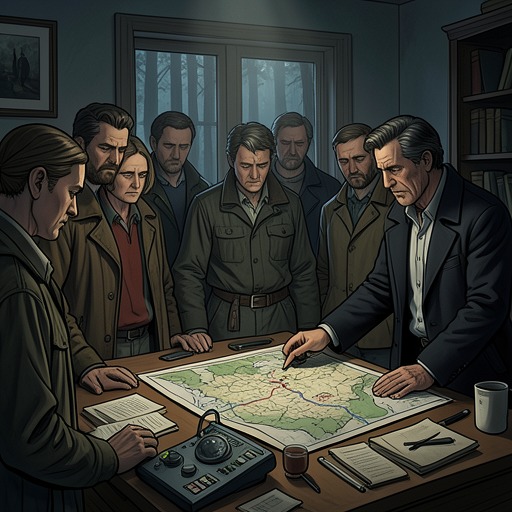
In the days after the massacre, television crews, state and federal law-enforcement personnel, and true-crime documentarians arrived in Kettle Springs. Their presence brought new attention to the town, but for Quinn Maybrook the cameras and reporters also offered a measure of security: more eyes were watching for surviving clowns or sympathizers. The Federal Bureau of Investigation’s arrival marked a shift from the immediate violence to an inquiry into who had organized it and who had helped.
The investigation took place against the scale of the conspiracy. Sheriff George Dunne had described the Kettle Springs Improvement Society as a group assembled over months, with information shared selectively so potential members would not be frightened away. He also admitted that the Founder’s Day stunt had pushed the town toward urgent action. The federal inquiry therefore confronted an organization whose recruitment and complicity had been deliberately obscured, rather than a single isolated attack.
Records, Questioning, and Arrests
Shortly after the Federal Bureau of Investigation arrived, authorities conducted a round of questioning and arrests. Investigators used Arthur Hill’s phone records, emails from the sheriff’s office, and GPS data from phones that had registered at Kettle Springs Improvement Society meetings. Those records connected participants to the group’s gatherings and helped ensure that no accomplice could remain hidden.
The evidence also undercut the conspirators’ hostility toward modern technology. Many of the clowns, including Dunne, had not been sufficiently tech-savvy to conceal their digital traces. Their phones, communications, and recorded locations preserved links that could be followed after the attack. Quinn recognized the reversal: the devices the conspirators opposed had helped investigators catch them. The inquiry’s reach mattered especially because the conspiracy had relied on selective disclosure and community recruitment; digital records made those dispersed ties legible.
Role in the Aftermath
The Federal Bureau of Investigation is presented as part of a broader state and federal response, not as the sole source of every consequence in town. The post-massacre attention also included journalists and documentarians, while arrests followed an investigative process drawing on multiple kinds of records. The evidence establishes the Bureau’s arrival and the data-led inquiry, but does not detail individual agents, particular interviews, or specific charges.
The investigation helps close the gap between the conspirators’ claim to act for Kettle Springs and the consequences of their actions. Their organization had used meetings, secrecy, and a public crisis to mobilize members; investigators used communications and location histories to reconstruct those connections. In that reversal, the town’s modern devices become more than a point of ideological conflict: they are the means by which a concealed collective is exposed.